
The Expert Hat
for Humanoids
Expert-level skill for any humanoid, through voice. A wearable that captures how your best people work — and makes any humanoid do it their way.
1.Humanoids will fill the skill gaps at the world's workplaces
Tireless, scalable, deployable anywhere — one humanoid repeats an expert skill around the clock. With 2.1 million manufacturing jobs unfilled, and the same story in healthcare, the trades and energy, the opportunity is enormous. Human-shaped robots that walk, see and grasp go where people go: factories, hospitals, kitchens, homes. The hardware is finally cheap, reliable and capable, and the brain has arrived with it — vision-language-action models that turn what a robot sees and hears into motor commands.
2.But they arrive without expert skills
Customers choose a chef, a surgeon, a master welder for their way of doing things. Humanoid makers hit three walls trying to follow it.
- Hard to captureAn expert's best moves are instinct, not script. Manuals and demos miss the why — and the why never makes it in.
- Hard to enforceRules don't enforce themselves. Cameras keep a robot from spilling — nothing checks the chef's exact angle and timing. The signature lives in the small choices.
- Hard to generalizeDifferent tools, different ingredients, new situations. Fleets average it all into one shared brain — and your expert's difference gets washed out.
The humanoid arrives competent — but not yours.
3.Trained gives competence. Collaboration gives expertise.
A humanoid's trained skills — from foundation models and classical training — are generic competence, like a culinary-school graduate. Expert skills are your specific way: guardrails, technique, recovery, the way an apprentice learns from a master. Heylper layers the second on the first through AI collaboration, with three abilities working together:
- Procedural awarenessshares the procedure
- Perceptual awarenesswatches the doer
- Conversational abilityspeaks · listens · adapts
4.The Expert Hat
An external AI wearable — camera, mic, speaker, edge compute — that runs on glasses, a phone, an AI pin or a dedicated hat. It captures skill at four levels of detail:
- L1 · TaskThe goal — "Make espresso"
- L2 · StepsThe plan — grind → tamp → pull
- L3 · ActionsThe doing — position, press, hold
- L4 · TechniquesThe quality — 25 lbs, elbow above
Capture
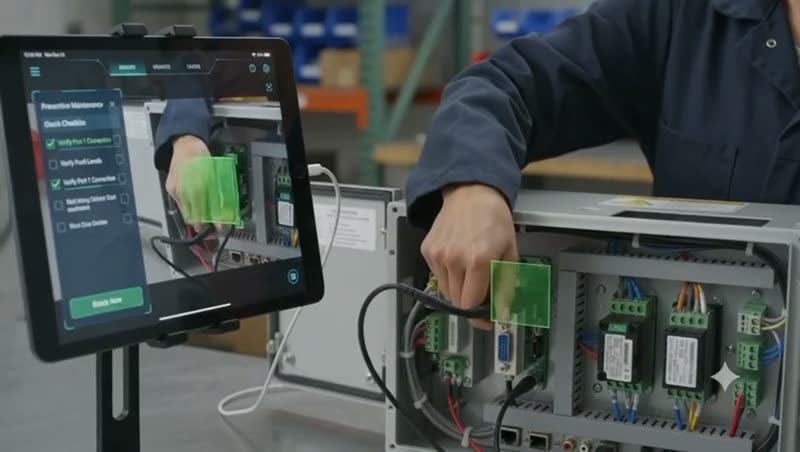
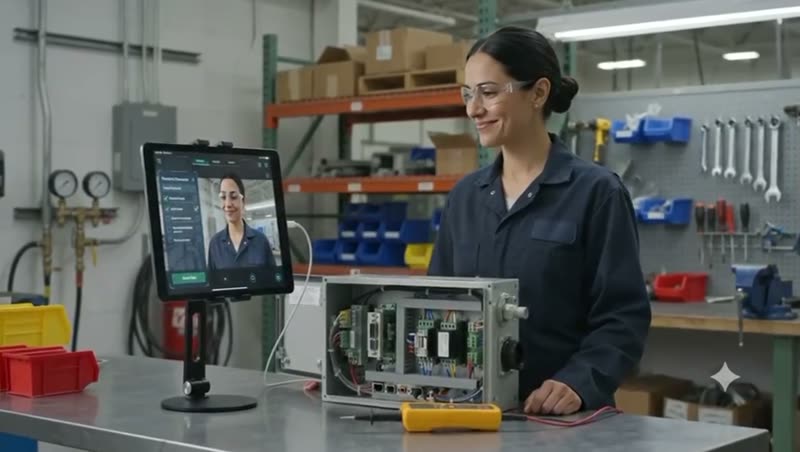
The expert wears the Hat and performs the task. It watches, listens and talks back — confirming steps, asking why. Tacit reasoning becomes a structured skill graph.
Enforce
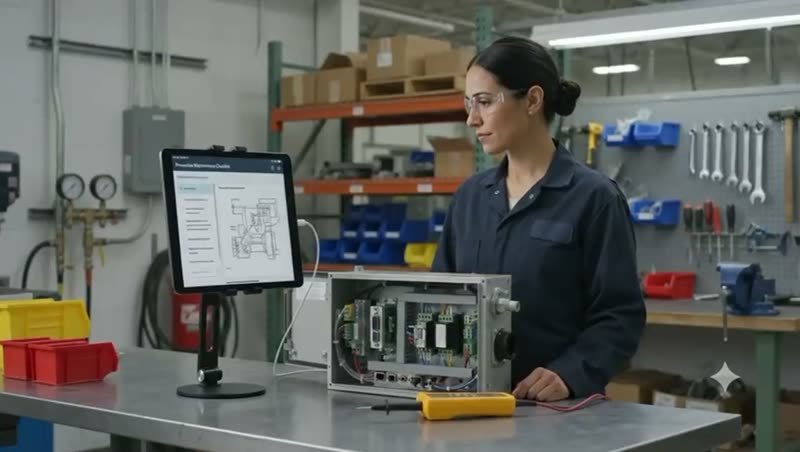
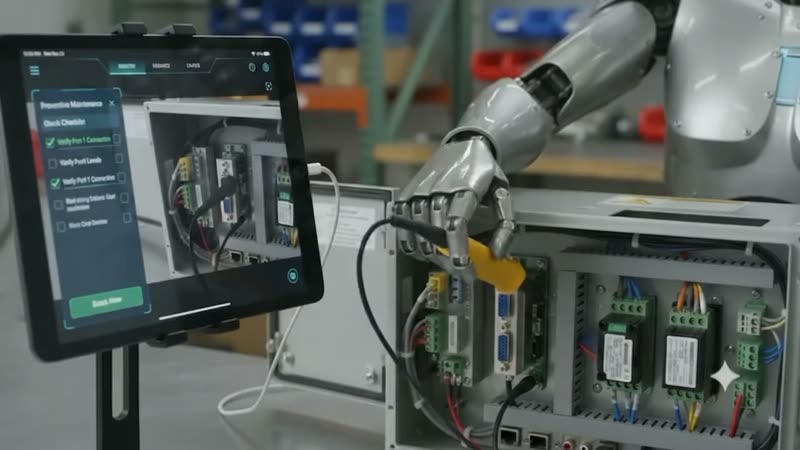
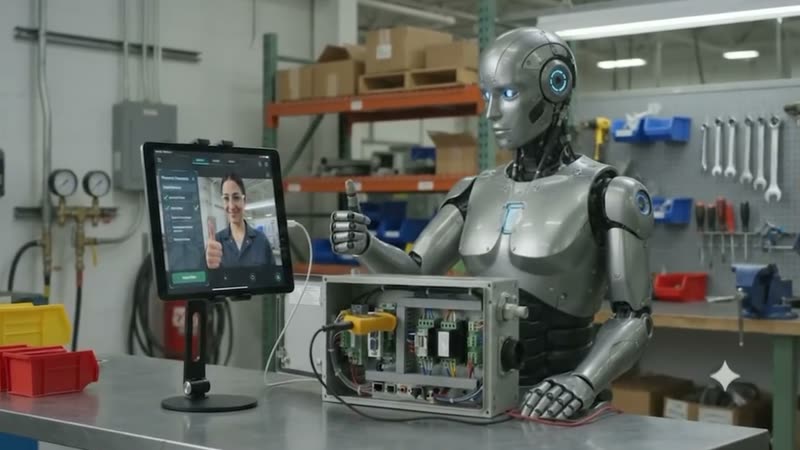
Same Hat, now on the humanoid. It enforces the graph step by step, so the robot runs the task the expert's way. The two films on the homepage are exactly this: the same bench, the same checklist, first with the expert and then with the humanoid.
Improve
Every correction becomes a permanent rule. Answer a new situation once — enforced forever. The skill grows each session.
5.Three AIs. Three cadences. One loop.
- Shadower · seesExpert behaviour is unstructured. A vision-language-action model acts as a repeatable parser, turning a raw demonstration into structured skill-graph entries. ~10 Hz.
- Planner · reconcilesThe task is unpredictable. A next-action-prediction model walks the skill graph and tracks the doer's state — one mini-planner per step. Per state change.
- Collaborator · speaksTalking while doing is hard. A conversation manager decides what to say, when to stay silent, and when to escalate. Sub-second.
Access
Heylper is free while it is in beta. For early access, to capture a skill with your experts, or to put the Hat on your humanoid, write to us — a person reads every message.
Contact for early access— Sankar
Back to home